Nighttime Habits That Quietly Destroy Sleep Quality Without You Realizing : Which nighttime habit do you feel is affecting your sleep the most right now? Many people believe they have sleep problems, but in reality, their nighttime habits are quietly working against them. You may go to bed on time, avoid caffeine, and still wake up feeling unrefreshed, heavy, or mentally foggy. This often leads people to blame stress, age, diet, or genetics—when the real issue is much simpler and easier to fix.Sleep quality is shaped long before your head touches the pillow.
What you do in the evening hours determines how easily your nervous system relaxes, how deeply you sleep, and how effectively your body recovers overnight. Small behaviors repeated every night—scrolling your phone, eating late, staying mentally stimulated—can silently block deep sleep without you realizing it. Deep sleep is the phase where the body repairs tissues, balances hormones, clears brain waste, and restores energy. When deep sleep is disrupted, the body may still “sleep,” but it does not recover properly. Over time, this shows up as fatigue, poor focus, low motivation, mood swings, and weakened stress tolerance.
This guide explains how nighttime habits sabotage sleep quality, why their effects accumulate slowly, and what actually helps restore a natural sleep rhythm. From experience, fixing evening habits often improves sleep faster and more sustainably than adding supplements, gadgets, or complex routines.
This article is regularly updated to reflect current wellness practices in 2026.
🔹 WHO THIS GUIDE IS FOR
This guide is for people who fall asleep easily but wake up tired, beginners trying to improve sleep quality naturally, and anyone struggling with inconsistent energy despite adequate sleep hours. For example, someone who scrolls their phone in bed may unknowingly delay deep sleep every night. Who should be careful: people with chronic insomnia, sleep apnea, or medical conditions should seek personal guidance before making major changes.
This guide is for:
People who fall asleep easily but wake up tired
Beginners trying to improve sleep quality naturally
Anyone with inconsistent energy despite adequate sleep hours
People who rely on caffeine to “feel normal”
Individuals experiencing brain fog or emotional fatigue
Example
Someone may fall asleep within minutes but still wake up exhausted. Often, this happens because deep sleep is delayed or shortened by evening habits, even though falling asleep feels easy.
Who Should Be Careful
People with chronic insomnia, sleep apnea, neurological conditions, or medical issues should seek personalized guidance before making major changes. Persistent sleep problems deserve professional attention.
🔹Why Nighttime Habits Disrupt Sleep So Easily
The body prepares for sleep hours before bedtime. Light exposure, mental stimulation, eating patterns, and stress signals during the evening all affect melatonin release and nervous system relaxation. What usually goes wrong is assuming sleep starts at bedtime, when in reality, sleep quality is decided long before the lights go off.
Sleep does not begin at bedtime. The body starts preparing for sleep 2–4 hours earlier. During this time, the brain watches for signals that tell it whether it is safe to power down.
Key signals include:
Light exposure
Mental stimulation
Emotional stress
Eating patterns
Environmental cues
Melatonin release, nervous system relaxation, and circadian rhythm alignment all depend on these signals. What usually goes wrong is assuming that lying in bed equals sleep preparation—when in reality, sleep quality is decided long before lights-off.
Nighttime Habits Affecting Sleep – What Actually Sabotages Recovery
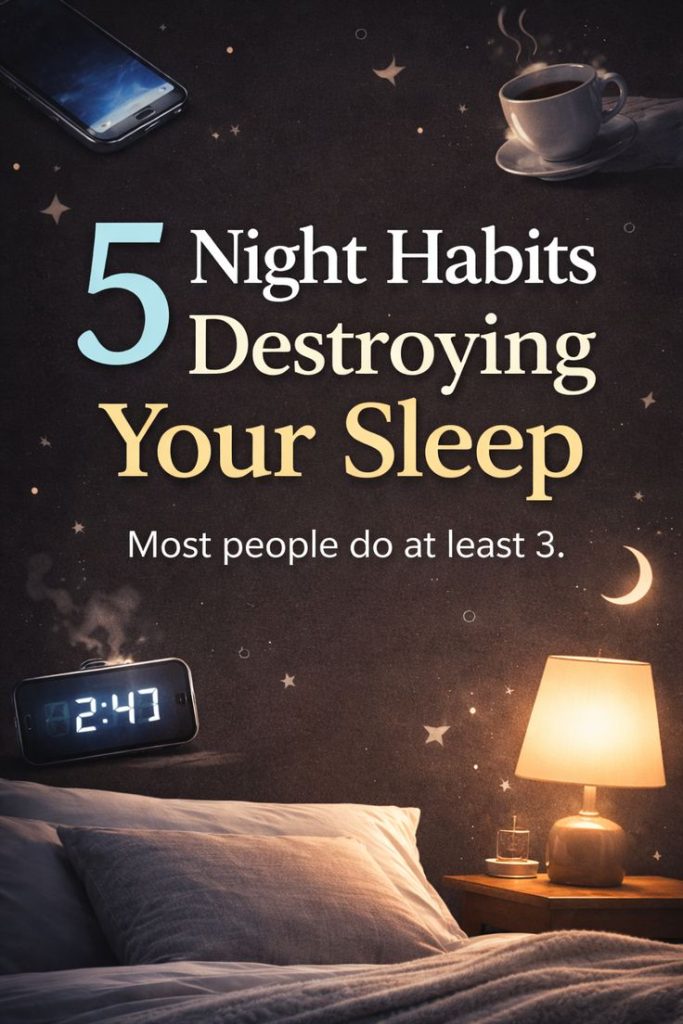
1️⃣ Late-Night Screen Exposure
Screens emit blue light that delays melatonin release. Even short exposure before bed can reduce deep sleep and keep the brain in alert mode longer than expected.
Screens emit blue light, which directly interferes with melatonin production—the hormone that signals the body it’s time to sleep.
Why This Matters
Melatonin doesn’t just help you fall asleep. It also helps:
Initiate deep sleep
Maintain sleep cycles
Support overnight recovery
Even 20–30 minutes of screen exposure before bed can delay melatonin release and shift sleep toward lighter stages.
Real-Life Example
Someone scrolls social media in bed and falls asleep quickly afterward. Despite this, they wake up tired. The issue isn’t falling asleep—it’s delayed deep sleep caused by screen light.
2️⃣ Inconsistent Bedtime Routine
Going to bed at different times each night confuses the body clock. Without a predictable rhythm, the brain struggles to enter deep sleep efficiently. Internal link: BioHelixa sleep routines guide.
The brain thrives on predictability. Going to bed at different times each night confuses the body clock and weakens sleep signals.
What Happens Without Consistency
Melatonin release becomes irregular
Deep sleep onset is delayed
Sleep cycles become fragmented
Example
A person sleeps at 10 PM on weekdays and 1 AM on weekends. Even with enough total hours, the body struggles to enter deep sleep efficiently.
Consistency matters more than perfection.
3️⃣ Heavy or Late Dinners
Eating heavy meals close to bedtime keeps digestion active during sleep. This reduces sleep depth and increases nighttime awakenings without conscious awareness.
Digestion and deep sleep compete for energy.
When You Eat Late or Heavily
Blood flow shifts to digestion
Body temperature remains elevated
Nighttime awakenings increase
Deep sleep shortens
Example
Someone eats a large dinner at 9:30 PM and wakes up feeling unrested. The body spent the night digesting instead of repairing.
Light, earlier dinners support deeper recovery.
4️⃣ Mentally Stimulating Content
Late-night news, social media, or intense shows activate stress and emotional centers in the brain. This delays relaxation and shortens restorative sleep phases.
The brain doesn’t distinguish between “real” and “digital” stress.
Late-Night Stimulation Includes
News consumption
Social media debates
Intense shows or movies
Work emails
These activate emotional and stress centers in the brain, keeping the nervous system alert.
Example
A person watches dramatic content at night and feels mentally tired but restless in bed. The mind remains activated, delaying deep sleep.
5️⃣ Excess Evening Caffeine or Sugar
Caffeine and sugar consumed late in the day can linger in the system for hours. Even if you fall asleep, sleep quality and recovery suffer.
Caffeine can remain active for 6–8 hours, and sugar spikes increase alertness.
Hidden Sources Include
Tea
Chocolate
Energy drinks
Desserts
Even if you fall asleep, sleep depth and recovery suffer.
Example
Someone avoids coffee but drinks sweet tea at night. Sleep feels light and unrefreshing due to lingering stimulation.
6️⃣ Poor Sleep Environment Setup
Bright lights, noise, or warm room temperature disrupt sleep cycles. The body needs a cool, dark, and quiet environment to enter deep sleep stages.
The body uses environmental cues to determine sleep depth.
Disruptive Factors
Bright lights
Noise
Warm room temperature
Ideal Sleep Environment
Cool
Dark
Quiet
These conditions allow the body to drop into deep sleep more efficiently.
7️⃣ Carrying Stress Into Bed
Unprocessed stress keeps cortisol levels elevated at night. This prevents full nervous system relaxation and increases light sleep dominance. Internal link: BioHelixa stress balance article.
Unprocessed stress keeps cortisol elevated.
Effects of Elevated Nighttime Cortisol
Light sleep dominance
Frequent awakenings
Early morning fatigue
Example
Someone lies in bed replaying the day’s events. Even with enough sleep hours, recovery remains incomplete.
Calming the nervous system is essential for deep sleep.
8️⃣ Using the Bed for Non-Sleep Activities
Working, scrolling, or watching TV in bed weakens the brain’s association between bed and sleep, making it harder to switch off naturally.
The brain forms associations quickly.
When the Bed Is Used For
Work
Scrolling
Watching TV
The brain stops linking the bed with rest.
Example
A person struggles to “switch off” in bed. The environment signals alertness instead of sleep.
Using the bed only for sleep strengthens natural sleep cues.
🔹 REALITY CHECK
Nighttime habits don’t destroy sleep overnight. Their impact builds gradually, often unnoticed. The good news is that small, consistent adjustments often lead to visible improvements within weeks.
Perfection is unnecessary. Alignment is enough.
🔹 QUICK REFERENCE CHECKLIST
Limit screens after sunset | Daily | Beginner-friendly
Set a consistent wind-down time | Daily | Beginner-friendly
Eat lighter dinners | Most days | Beginner-friendly
Create a calm sleep environment | Nightly | Beginner-friendly
🔹 WHAT RESULTS CAN YOU EXPECT OVER TIME
Improving nighttime habits may help support deeper sleep, better morning energy, improved focus, and more stable mood. Changes often feel subtle but compound steadily with consistency.
With improved nighttime habits, many people experience:
Deeper sleep
Better morning energy
Improved focus
More stable mood
Reduced reliance on caffeine
Changes may feel subtle at first but compound steadily.
🔹 CONCLUSION
Sleep quality is shaped by what you do before bed, not just how long you sleep. Nighttime habits either prepare the body for deep recovery—or quietly block it.
By adjusting small evening behaviors, you remove hidden barriers to sleep and allow the body to recover naturally. Sustainable sleep improvement doesn’t require extreme routines—only awareness and consistency.
Q1: Can small habits really affect sleep quality? A: Yes, repeated small habits strongly influence sleep depth and recovery. Q2: Is screen time the biggest sleep disruptor? A: It is one of the most common and underestimated factors. Q3: Does late eating always reduce sleep quality? A: Heavy or frequent late meals often disrupt sleep depth. Q4: Can stress alone ruin sleep quality? A: Yes, stress keeps the nervous system alert during rest. Q5: Is sleep quality more important than sleep duration? A: Both matter, but quality strongly affects recovery. Q6: Can a bedtime routine really help? A: Yes, routines signal the body to prepare for rest. Q7: Does room temperature affect sleep? A: Cooler environments often support deeper sleep. Q8: Can poor sleep habits affect weight? A: Indirectly, yes, through hormone and appetite disruption. Q9: How long does it take to improve sleep quality? A: Improvements usually happen gradually with consistent habits. Q10: Are nighttime habits reversible? A: Yes, most habits can be adjusted with awareness and consistency.
👤
About the Author & Editorial Review
Puma U
Content on BioHelixa is created by Puma U, a certified Lab Technician (DMLT) with over 10 years of experience in public health and laboratory science, including clinical exposure within India's National Rural Health Mission (NRHM). His background in laboratory diagnostics and metabolic science provides practical insight into how cellular biology, hormones, and bio-tracking influence human performance.
📋 Editorial Review
Select health-related content on BioHelixa may be reviewed by Dr. Prashant G (MBBS), a practicing medical doctor, to support general accuracy and improve content quality. This review is intended for educational quality assurance only and does not represent formal medical certification or individualized medical advice.
⚠️ Disclaimer: This content is for educational and informational purposes only and is not intended as a substitute for professional medical advice, diagnosis, or treatment.