Longevity Habits Improve Energy, Focus, and Sleep Together : Many people try to fix low energy, poor focus, and bad sleep as if they are separate problems. One solution for fatigue, another for concentration, and something else entirely for sleep. Yet despite trying multiple strategies, the issues often persist.
This happens because energy, focus, and sleep are not isolated systems. They are connected outcomes of how well the body’s internal rhythms are supported. When one area breaks down, the others usually follow.
For example, poor sleep reduces next-day energy. Low energy makes focus harder. Poor focus increases stress, which then interferes with sleep again. This cycle repeats quietly until feeling tired, distracted, and unrested becomes normal.
Longevity habits aim to strengthen the foundation that supports all three together. Instead of chasing quick fixes, these habits work by stabilizing the body’s natural signals over time.
This guide focuses on simple, realistic longevity habits that fit into daily life and support energy, mental clarity, and sleep quality as a connected system..
This article is regularly updated to reflect current wellness practices in 2026.
Who This Guide Is For
This guide is for people who feel tired during the day, struggle to concentrate, or wake up feeling unrested despite trying different solutions. For example, someone balancing family responsibilities, screen time, and irregular routines may notice energy, focus, and sleep declining together. It is especially useful for beginners who want sustainable habits rather than constant trial and error.
This guide is for people who:
Feel tired during the day despite sleeping
Struggle to concentrate or stay mentally sharp
Have trouble getting deep, refreshing sleep
Have tried multiple solutions without lasting results
A common example is someone balancing work, family responsibilities, long screen hours, and irregular routines. Over time, all three areas—energy, focus, and sleep—start declining together.
This guide is especially helpful for beginners who want sustainable habits, not rotating cycles of temporary fixes.
Who Should Be Careful
People with chronic sleep issues, neurological conditions, or ongoing medical treatments should seek personal guidance. For example, long-term insomnia or fatigue linked to medical causes may require individual support.
People with:
Diagnosed sleep disorders
Neurological conditions
Chronic fatigue or insomnia
Ongoing medical treatments
should seek personalized guidance. These habits are supportive, not diagnostic or therapeutic, and should complement professional care when needed.
Why Energy, Focus, and Sleep Are Linked
Modern lifestyles often confuse the body’s internal signals. Late nights, inconsistent routines, high stress, and constant digital stimulation disrupt recovery cycles. When sleep quality drops, daytime energy suffers, and poor energy reduces focus. What usually goes wrong is addressing symptoms separately instead of supporting the foundation that connects them.
The body runs on rhythms. These rhythms regulate when we feel alert, when we feel tired, how well we concentrate, and how deeply we sleep.
Modern routines disrupt these rhythms in subtle but powerful ways:
Late nights with artificial lighting
Constant notifications and mental stimulation
Irregular meals
Long sitting hours
Chronic stress
When sleep quality drops, the nervous system struggles to recover. The next day, energy dips. Low energy reduces focus. Reduced focus increases stress and mental fatigue, which then interferes with sleep again.
The biggest mistake people make is treating symptoms separately instead of strengthening the foundation that supports all three.
Longevity habits work because they stabilize daily signals that the body depends on.
Longevity Habits That Improve All Three Together
1. Consistent Wake-Up Timing
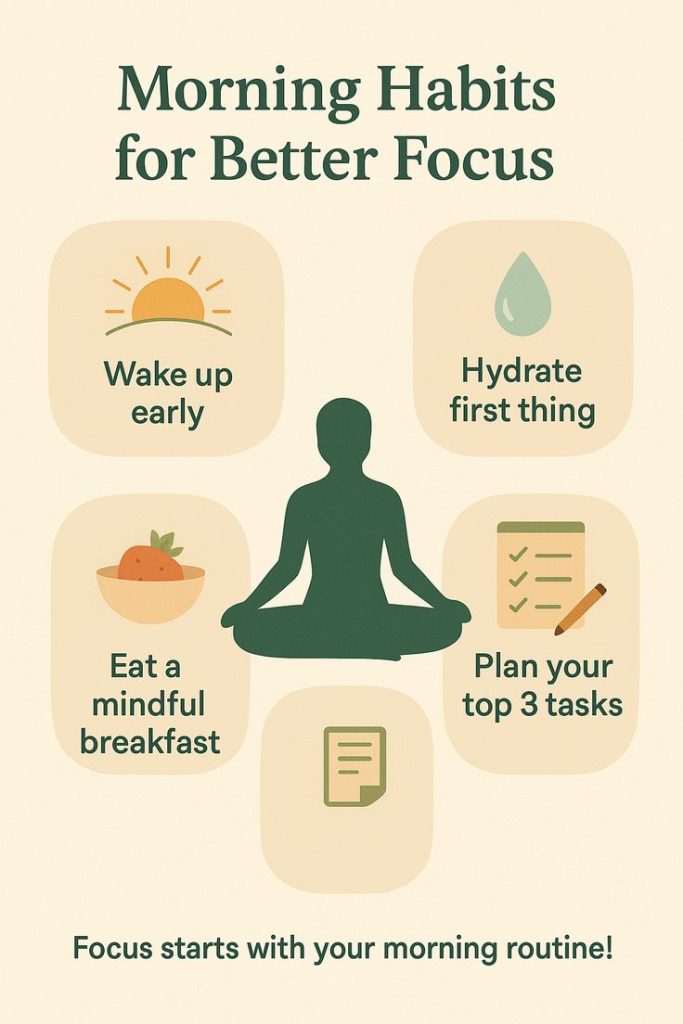
Waking up at the same time most days helps regulate the body’s internal clock. This supports better sleep quality, steadier daytime energy, and improved mental clarity. In daily life, choosing a realistic wake-up time matters more than being perfect.
Waking up at a similar time each day is one of the strongest signals you can give your body.
Why it matters
The body’s internal clock relies more on wake-up time than bedtime. A consistent wake-up time helps regulate:
Hormone release
Energy patterns
Sleep pressure at night
How it supports all three
Energy: More predictable alertness
Focus: Improved mental clarity
Sleep: Easier sleep onset at night
Real-life example
Instead of sleeping in on weekends, aim for a wake-up window within 60 minutes of your usual time. Perfection is not required—consistency is.
2. Morning Light Exposure
Exposure to natural light in the morning helps signal alertness and sets the timing for nighttime sleep. Even a few minutes near a window or outdoors can support energy and focus while preparing the body for rest later.
Morning light acts as a natural “on switch” for the brain.
Why it matters
Light exposure early in the day tells the brain when the day starts. This timing influences when the body feels sleepy later.
How it supports all three
Energy: Signals alertness
Focus: Improves cognitive readiness
Sleep: Supports deeper sleep later
Real-life example
Step outside for 5–10 minutes
Sit near a window while having tea
Walk while making a morning call
No special effort required.
3. Balanced Morning Nutrition
A balanced breakfast helps stabilize energy and prevent mid-morning crashes that affect focus. Simple meals with protein, fiber, and healthy fats support mental clarity without complicated planning.
What you eat in the morning sets the tone for energy and focus.
Why it matters
Skipping meals or eating only refined carbohydrates can lead to energy crashes and mental fog later in the day.
How it supports all three
Energy: More stable blood sugar
Focus: Better mental clarity
Sleep: Reduced evening cravings and disruptions
Real-life example
Simple balanced options:
Eggs with vegetables
Yogurt with nuts and seeds
Lentils with whole grains
Complex plans are unnecessary.
4. Regular Movement During the Day
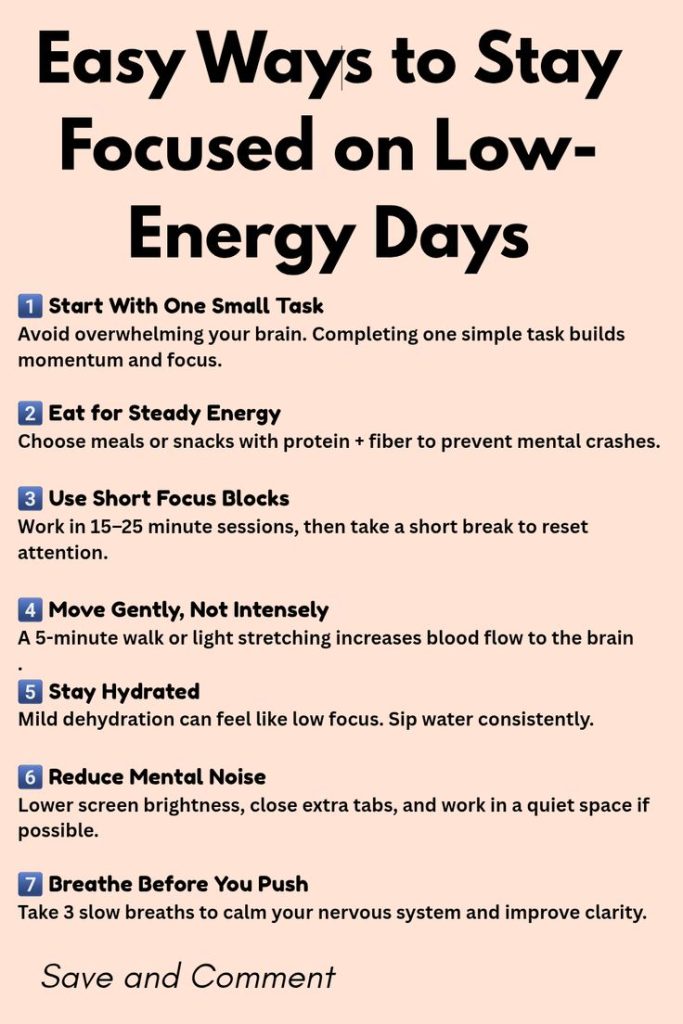
Light movement throughout the day supports circulation and brain function. Short walks or gentle stretching help refresh focus and prevent physical fatigue. I have seen this work well for people who sit for long hours.The body is not designed for long periods of stillness.
Why it matters
Prolonged sitting reduces circulation and increases mental fatigue.
How it supports all three
Energy: Boosts circulation
Focus: Refreshes the brain
Sleep: Reduces restlessness
Real-life example
Stand every 30–60 minutes
Stretch during calls
Walk for a few minutes between tasks
Small movements add up.
5. Stress Regulation Pauses
Small stress-reduction moments help prevent nervous system overload. Slow breathing or short breaks can restore focus and preserve energy, which supports better sleep later.
Stress without recovery drains the system.
Why it matters
Constant stress keeps the nervous system in a heightened state, which affects focus and sleep.
How it supports all three
Energy: Prevents burnout
Focus: Improves mental clarity
Sleep: Calms the nervous system
Real-life example
1–2 minutes of slow breathing
Sitting quietly between tasks
Stepping outside briefly
These pauses reset the system.
6. Smart Caffeine Timing
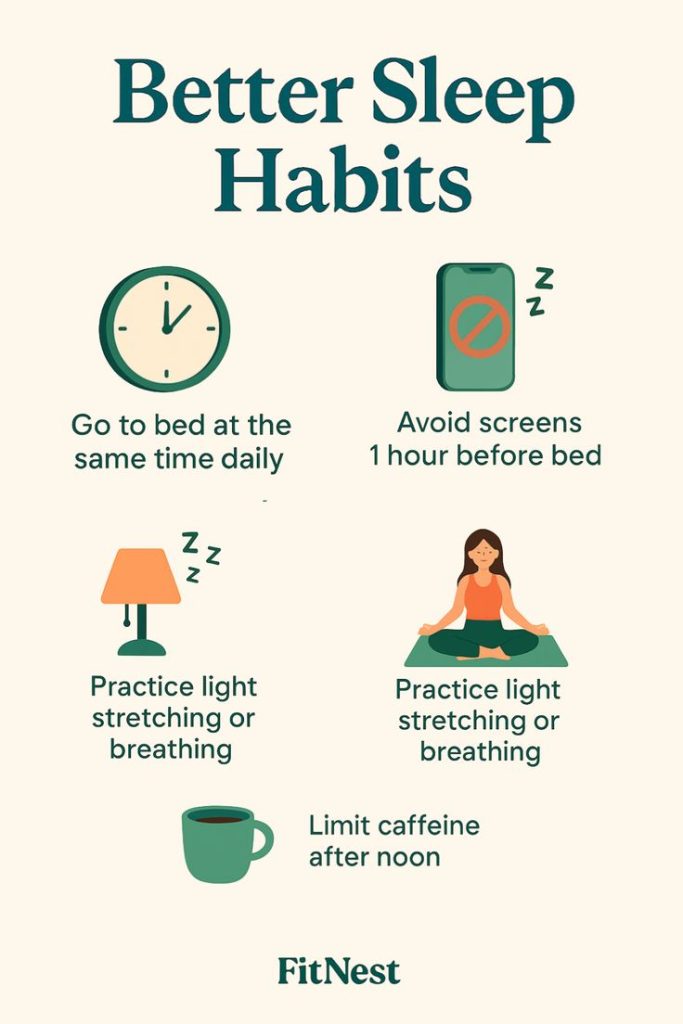
Using caffeine earlier in the day supports alertness without interfering with sleep. Avoiding late intake helps the body wind down naturally, maintaining balance across energy and rest.Caffeine is a tool, not a solution.
Why it matters
Late caffeine intake interferes with sleep even if you fall asleep easily.
How it supports all three
Energy: Maintains alertness
Focus: Improves concentration
Sleep: Protects nighttime recovery
Real-life example
Use caffeine earlier in the day
Avoid intake late afternoon or evening
Timing matters more than quantity.
7. Evening Light and Screen Control
Reducing bright lights and screens in the evening helps signal the body to slow down. Simple changes like dim lighting support deeper sleep and improve next-day energy.
Evenings should signal slowing down.
Why it matters
Bright light at night delays sleep signals and keeps the brain alert.
How it supports all three
Energy: Better next-day alertness
Focus: Reduced mental fatigue
Sleep: Improved sleep depth
Real-life example
Dim lights after sunset
Reduce screen brightness
Avoid intense content before bed
Small changes create big effects.
8. Predictable Wind-Down Routine
Repeating calming activities before bed helps the brain transition into rest mode. Light stretching, reading, or quiet music support mental relaxation and sleep quality.The brain responds to patterns.
Why it matters
A repeated evening routine trains the brain to expect rest.
How it supports all three
Energy: Better recovery
Focus: Clearer mornings
Sleep: Faster sleep onset
Real-life example
Light stretching
Journaling
Calm music
Reading
Consistency is more important than duration.
9. Steady Hydration
Consistent hydration supports brain function and physical energy. Spreading intake across the day helps avoid fatigue without disrupting sleep at night.Hydration supports brain and body function.
Why it matters
Even mild dehydration affects concentration and energy.
How it supports all three
Energy: Supports circulation
Focus: Improves cognitive performance
Sleep: Prevents nighttime disruption
Real-life example
Sip water steadily throughout the day instead of forcing large amounts at once.
10. Long-Term Habit Consistency
Longevity habits work best when practiced consistently, not intensely. Small daily signals help the body adapt over time, improving energy, focus, and sleep together.This is the foundation of longevity.
Why it matters
The body adapts to repeated signals, not occasional effort.
How it supports all three
Energy: Steady improvement
Focus: Stable clarity
Sleep: Reliable recovery
Real-life example
Doing small habits daily at 70% consistency is better than perfect routines followed briefly.
Reality Check
Results vary from person to person. These habits do not produce instant transformation. Improvements happen gradually and depend on consistency.
Longevity habits support balance, not shortcuts.
Quick Reference Checklist
Consistent wake-up time — Daily — Beginner-friendly
These habits may help support steadier energy, can improve mental focus, and often improve sleep quality when followed consistently. No timelines and no promises, only gradual support.With consistent practice, these habits may support:
Steadier daily energy
Improved mental clarity
Better sleep quality
Reduced stress reactivity
There are no timelines or guarantees—only gradual improvement.
Conclusion
Energy, focus, and sleep are connected outcomes of daily habits, not separate goals. Supporting the body’s rhythm through simple longevity habits creates balance over time. Start small, stay consistent, and focus on progress rather than perfection. You may want to bookmark this guide or explore related BioHelixa posts for deeper support.
Q1: Can longevity habits really improve energy and sleep together? A: Yes, supporting daily rhythms often helps both naturally.
Q2: Do these habits require strict routines? A: No, flexible consistency works better than rigid schedules.
Q3: Is caffeine harmful for longevity? A: Timing matters more than elimination for most people.
Q4: Can stress affect focus and sleep quality? A: Ongoing stress can influence both mental clarity and rest.
Q5: Are supplements required for longevity habits? A: Many habits rely on lifestyle rather than supplements.
Q6: How soon can changes be noticed? A: Improvements often appear gradually with consistency.
Q7: Can busy people follow these habits? A: Yes, they fit into normal daily routines.
Q8: Does hydration affect focus? A: Balanced hydration supports mental clarity and energy.
Q9: Are longevity habits safe for beginners? A: Yes, they are designed to be simple and sustainable.
Q10: How do longevity habits improve energy, focus, and sleep together? A: They support the body’s natural recovery and rhythm through consistent daily signals.
👤
About the Author & Editorial Review
Puma U
Content on BioHelixa is created by Puma U, a certified Lab Technician (DMLT) with over 10 years of experience in public health and laboratory science, including clinical exposure within India's National Rural Health Mission (NRHM). His background in laboratory diagnostics and metabolic science provides practical insight into how cellular biology, hormones, and bio-tracking influence human performance.
📋 Editorial Review
Select health-related content on BioHelixa may be reviewed by Dr. Prashant G (MBBS), a practicing medical doctor, to support general accuracy and improve content quality. This review is intended for educational quality assurance only and does not represent formal medical certification or individualized medical advice.
⚠️ Disclaimer: This content is for educational and informational purposes only and is not intended as a substitute for professional medical advice, diagnosis, or treatment.