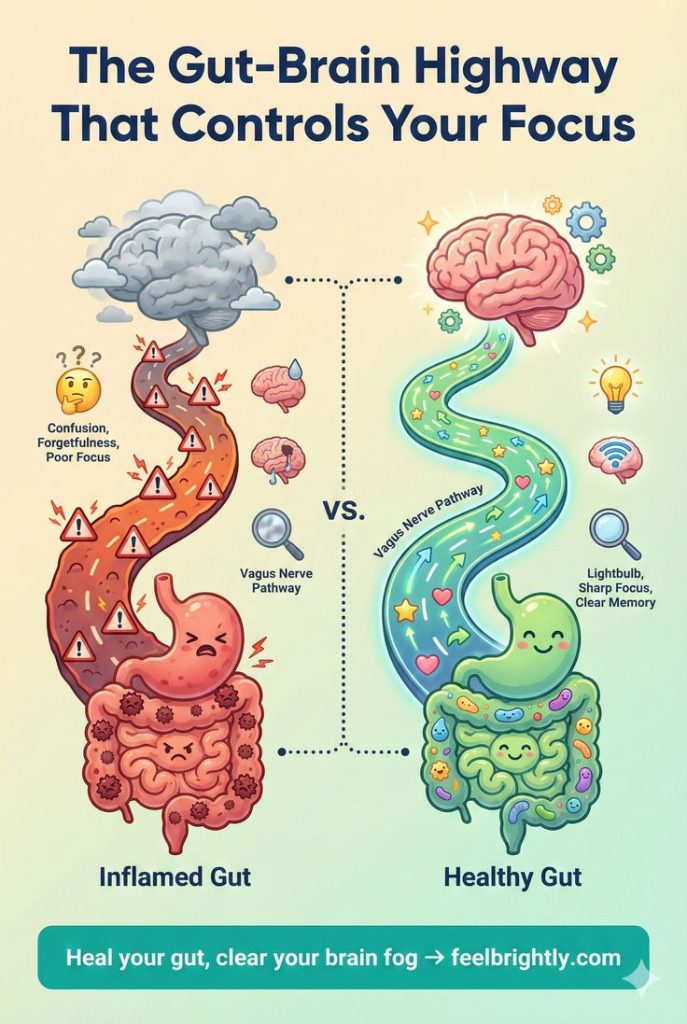
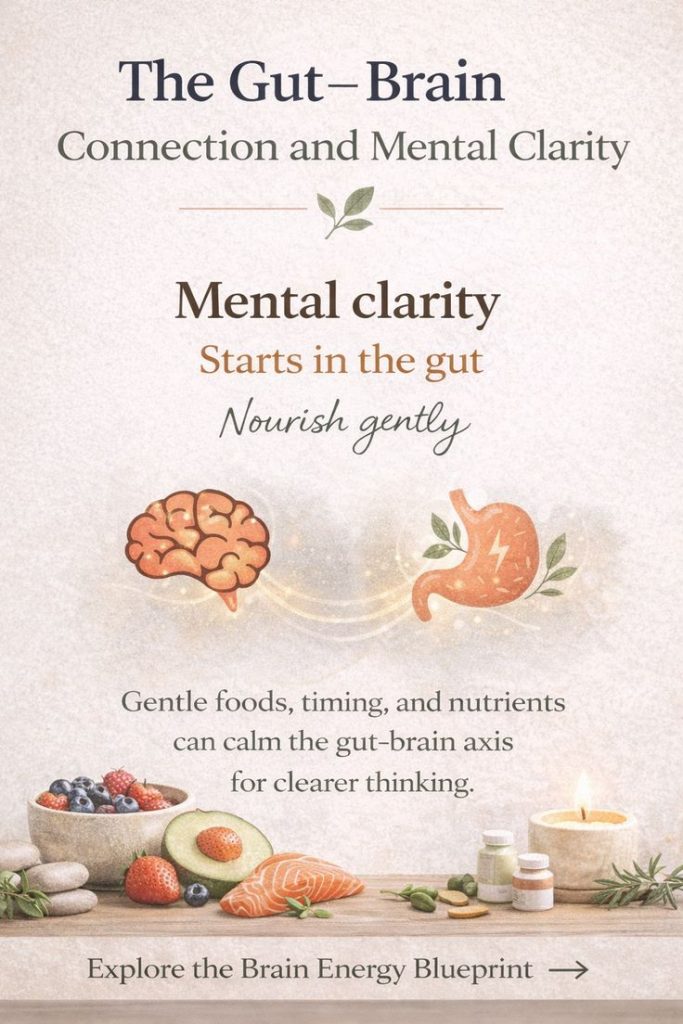
Gut Issues Trigger Brain Fog and Destroy Mental Focus : Have you noticed brain fog after meals or during digestive discomfort? Brain fog often feels like a problem inside the head—but in many cases, it begins much deeper in the body. Difficulty concentrating, slow thinking, forgetfulness, mental fatigue, and low motivation are frequently linked to digestive imbalance, not a lack of intelligence, discipline, or sleep alone.
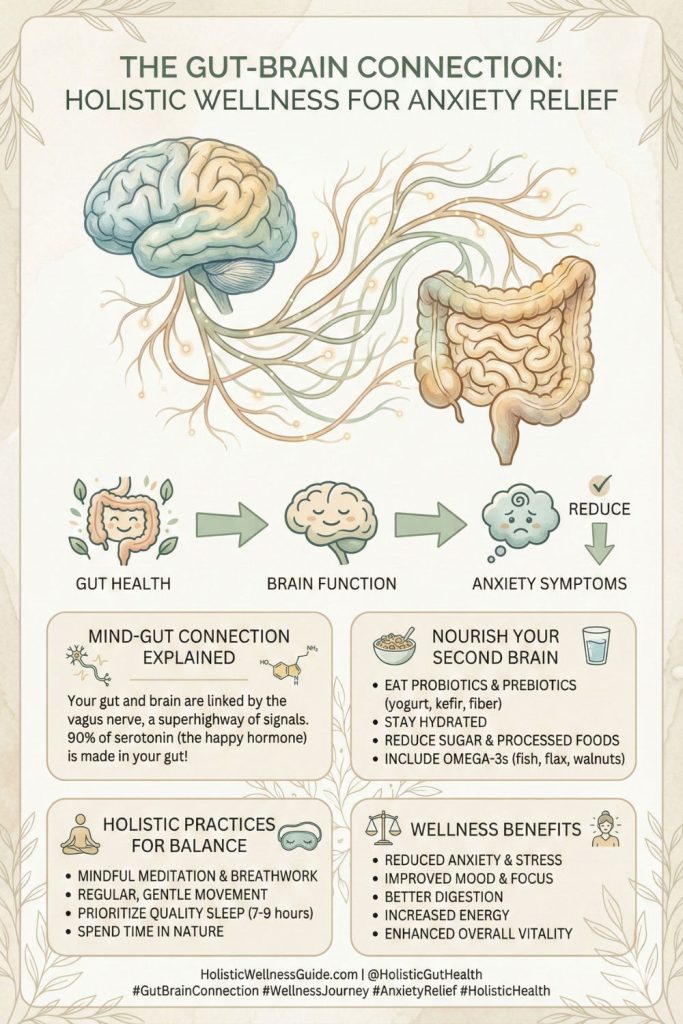
The gut and brain are connected through what scientists call thegut–brain axis. This is a two-way communication system involving nerves (especially the vagus nerve), hormones, immune signals, and neurotransmitters. What happens in your digestive system directly influences how clearly your brain can think.
When digestion is working well, the brain receives steady energy, balanced neurotransmitters, and low inflammation signals. When digestion is disrupted, the brain quietly shifts into a low-performance mode. Focus becomes harder. Thoughts feel heavier. Mental energy drains faster.
Many people try to solve brain fog with productivity hacks, caffeine, supplements, or motivation techniques. These approaches may help temporarily, but they often fail because the root cause lives in the gut, not the brain.
From experience and research-backed wellness practice, improving gut habits often restores mental clarity more sustainably than forcing focus or overstimulating the nervous system.
This guide explains how gut issues trigger brain fog, what’s actually happening inside the body, and how restoring digestive balance supports sharper thinking over time.
This article is regularly updated to reflect current wellness practices in 2026.
🔹 WHO THIS GUIDE IS FOR
This guide is for people who:
Experience brain fog without a clear reason
Feel mentally dull despite eating “healthy”
Struggle with bloating, gas, or digestive discomfort
Have inconsistent energy and focus throughout the day
Want to improve mental clarity naturally
Example
Someone eats clean foods, avoids junk, and sleeps 7–8 hours—but still feels mentally slow, unfocused, or forgetful. In many such cases, the missing piece is gut balance, not discipline or intelligence.
Who Should Be Careful
People with diagnosed digestive disorders, autoimmune conditions, neurological issues, or chronic illness should seek professional guidance before making major dietary or lifestyle changes.
🔹 Why Brain Fog Often Starts in the Gut
The gut is far more than a digestion tube. It plays a central role in:
Nutrient absorption
Neurotransmitter production
Inflammation regulation
Hormonal signaling
Immune system balance
Over 90% of serotonin and a large portion of dopamine are produced or regulated in the gut. The gut also controls how efficiently nutrients like iron, B-vitamins, magnesium, and amino acids reach the brain.
When digestion is impaired, the brain doesn’t receive what it needs—and instead receives stress and inflammation signals. The mistake most people make is treating brain fog as a brain-only problem while ignoring digestive health.
Gut Health and Brain Fog – What Actually Happens Inside the Body
1️⃣ Poor Nutrient Absorption Starves the Brain
Even with a nutrient-rich diet, poor digestion can prevent essential nutrients from being absorbed properly.
Why This Matters
The brain relies on nutrients such as:
B-vitamins for neurotransmitter production
Iron for oxygen delivery
Magnesium for nerve signaling
Amino acids for dopamine and serotonin
When digestion is weak, these nutrients pass through the body without being fully absorbed. The brain then operates with limited resources, leading to mental fatigue and slow thinking.
Real-Life Example
Someone eats vegetables, fruits, and protein regularly but still feels mentally exhausted. Blood tests may appear normal, yet digestion issues prevent nutrients from reaching brain tissue efficiently.
This creates functional deficiency, not dietary deficiency.
2️⃣ Gut Inflammation Sends Stress Signals to the Brain
Low-grade gut inflammation is one of the most overlooked causes of brain fog.
What Happens During Gut Inflammation
The immune system stays slightly activated
Inflammatory molecules enter circulation
The brain receives “danger” signals
Mental processing slows to conserve energy
The brain responds to inflammation by reducing cognitive load, which shows up as fogginess and poor concentration.
Example
A person experiences frequent bloating, mild discomfort, or food sensitivity reactions. Even without pain, chronic inflammation quietly affects focus and memory.
👉 Internal link suggestion:BioHelixa inflammation & aging guide
3️⃣ Imbalanced Gut Bacteria Disrupt Neurotransmitters
The gut microbiome plays a direct role in mental clarity.
How Gut Bacteria Affect Focus
Healthy gut bacteria help:
Produce serotonin
Regulate dopamine
Reduce inflammatory stress
Maintain gut barrier integrity
When harmful bacteria dominate, neurotransmitter balance shifts. Motivation drops, mood becomes unstable, and focus feels inconsistent.
Real-Life Example
Someone feels mentally sharp some days and foggy on others without clear reason. These fluctuations often mirror gut bacterial imbalance rather than mental discipline.
Gut balance creates mental consistency.
4️⃣ Blood Sugar Fluctuations Trigger Brain Fog Cycles
Digestive imbalance often leads to unstable blood sugar regulation.
Why Blood Sugar Matters for Focus
The brain depends almost entirely on glucose. When digestion causes:
Rapid sugar spikes
Sudden crashes
Mental clarity follows the same pattern.
Example
After meals, someone feels briefly energized, then experiences a crash with foggy thinking and irritability. This isn’t willpower—it’s digestive-blood sugar instability.
Stable digestion supports stable mental energy.
5️⃣ Increased Toxin Load Slows Brain Processing
Poor digestion can allow toxins to circulate longer in the body. The brain responds by slowing processing speed to protect itself.
A healthy gut helps neutralize and eliminate toxins efficiently. A compromised gut allows toxins to circulate longer.
What the Brain Does in Response
The brain slows processing speed to protect itself from overload. This creates:
Slower thinking
Poor memory recall
Reduced creativity
Example
Someone feels mentally heavy after meals or during digestive discomfort. The brain reduces performance as a protective response.
The vagus nerve connects gut and brain. Digestive stress disrupts this communication, reducing mental sharpness and emotional regulation.
The vagus nerve is the main communication highway between gut and brain.
When Digestion Is Stressed
Vagus nerve signaling weakens
Parasympathetic (calm) response drops
Stress dominance increases
This reduces emotional regulation, focus, and clarity.
Example
During periods of digestive upset, people often feel anxious, unfocused, and emotionally reactive. This reflects disrupted gut–brain nerve signaling.
7️⃣ Chronic Digestive Stress Keeps the Brain in Survival Mode
Ongoing bloating, discomfort, or irregular digestion keeps the nervous system in stress mode, making sustained focus difficult. Internal link: BioHelixa stress balance guide.
Ongoing bloating, constipation, diarrhea, or discomfort keeps the nervous system in a constant low-level stress response.
Effects on the Brain
Focus becomes short-lived
Multitasking feels overwhelming
Creativity declines
Mental stamina drops
Example
Someone with daily digestive discomfort struggles to focus for long periods—even with motivation and interest. The brain prioritizes survival over performance.
🔹 REALITY CHECK
Gut-related brain fog does not appear overnight. It develops gradually and often feels “normal” until clarity improves.
The good news: small digestive improvements often create noticeable mental clarity within weeks. Consistency matters more than extreme protocols or supplements.
🔹 QUICK REFERENCE CHECKLIST
Eat at consistent times | Daily | Beginner-friendly
Support digestion before heavy meals | Most days | Beginner-friendly
Improving gut health may help support clearer thinking, better concentration, improved mood stability, and sustained mental energy. Changes are gradual and build with consistency.
With improved gut balance, many people experience:
Clearer thinking
Better concentration
Improved mood stability
More consistent mental energy
Reduced brain fog episodes
Changes are gradual but compound over time.
🔹 CONCLUSION
Mental focus does not depend on the brain alone. The gut plays a powerful role in clarity, mood, and cognitive balance. When digestion is supported, the brain receives better fuel, calmer signals, and fewer inflammatory messages.
Supporting gut health removes one of the biggest hidden causes of brain fog. Small, sustainable steps lead to lasting mental clarity.
Q1: Can gut health really cause brain fog? Yes. Gut–brain communication strongly affects mental clarity.
Q2: Is brain fog always digestive-related? No, but gut imbalance is a common contributor.
Q3: Can improving digestion improve focus? Yes, often over time with consistency.
Q4: Does bloating affect concentration? Yes. Digestive stress impacts nervous system function.
Q5: Are probiotics necessary for focus? Not always. Basic gut habits matter first.
Q6: Can stress worsen gut-related brain fog? Yes. Stress disrupts both digestion and focus.
Q7: Does sugar affect gut–brain balance? Excess sugar worsens imbalance and fog.
Q8: How long does gut-related brain fog last? It varies, but improvements are gradual.
Q9: Is hydration important for gut–brain health? Yes. Hydration supports digestion and circulation.
Q10: Can sleep improve gut-related brain fog? Yes. Sleep supports gut repair and brain recovery.
👤
About the Author & Editorial Review
Puma U
Content on BioHelixa is created by Puma U, a certified Lab Technician (DMLT) with over 10 years of experience in public health and laboratory science, including clinical exposure within India's National Rural Health Mission (NRHM). His background in laboratory diagnostics and metabolic science provides practical insight into how cellular biology, hormones, and bio-tracking influence human performance.
📋 Editorial Review
Select health-related content on BioHelixa may be reviewed by Dr. Prashant G (MBBS), a practicing medical doctor, to support general accuracy and improve content quality. This review is intended for educational quality assurance only and does not represent formal medical certification or individualized medical advice.
⚠️ Disclaimer: This content is for educational and informational purposes only and is not intended as a substitute for professional medical advice, diagnosis, or treatment.