Circadian biology is one of the most fundamental, deeply integrated systems governing human health. Far from a simple sleep-wake timer, your circadian rhythm regulates an intricate web of physiological processes—including hormone secretion, fluctuations in core body temperature, metabolic rate, immune function, and cellular repair—on an internal cycle of roughly 24 hours.
In modern high-efficiency environments across the United States, United Kingdom, Canada, Singapore, and Australia, this biological rhythm is increasingly disrupted. Constant artificial lighting, high-intensity screen exposure, erratic professional schedules, shift work, and continuous digital stimulation create a profound mismatch between our evolutionary internal clocks and the modern world.
As a result, many individuals struggle with:
Fragmented sleep architecture and midnight wakefulness
Declines in executive functioning and cognitive performance
Irregular appetite patterns and late-night metabolic cravings
Recent advances in chronobiology demonstrate that your circadian rhythm is not unyielding or permanently fixed. Instead, it operates as a highly responsive, dynamic system that continually calibrates itself based on environmental signals known as zeitgebers (German for “time givers” or “synchronizers”). The most powerful zeitgebers are ambient light, food timing, and physical activity.
This comprehensive guide explores seven science-informed, technology-assisted strategies to stabilize your circadian rhythm, utilizing modern behavioral systems and advanced optimization tools to restore systemic homeostasis.
What Circadian Biology Actually Controls
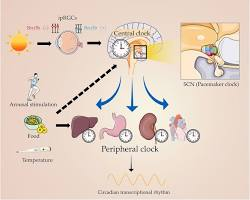
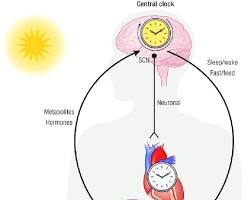
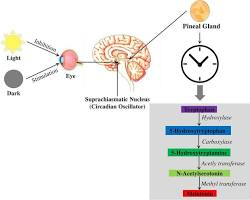
Your circadian architecture is orchestrated by a master clock located within the suprachiasmatic nucleus (SCN), a distinct region of the hypothalamus containing approximately 20,000 neurons. The SCN acts as the central conductor of your biological orchestra, utilizing neural and hormonal pathways to synchronize a myriad of distinct physiological rhythms.
The master clock exerts direct control over several critical bodily systems:
The Sleep-Wake Cycle: Directing the clear transition between alert wakefulness and restorative deep sleep states.
Hormonal Cascades: Coordinating the opposing flows of cortisol (which spikes sharply in the morning to drive alertness) and melatonin (which rises at night to facilitate sleep onset).
Core Body Temperature Regulation: Orchestrating a natural daily cycle where body temperature rises throughout the afternoon to support physical performance and drops to its lowest point in the early hours of the morning to protect deep sleep.
Cognitive Alertness Patterns: Managing distinct daily windows of peak executive clarity and natural mental rest.
Crucially, modern chronobiology reveals that the SCN does not act alone. Every major organ system—including your liver, gastrointestinal tract, pancreas, and skeletal muscle tissue—possesses its own peripheral molecular clock. To maintain true metabolic health, these peripheral clocks must remain in perfect structural harmony with the master clock in the brain.
Why Circadian Misalignment Happens in Modern Life
In our current hyper-connected society, circadian disruption is rarely accidental—it is structurally built into our modern environment. The primary culprits behind this biological drift include:
Chronic Nocturnal Blue Light Exposure: Artificial illumination from energy-efficient LEDs and digital displays tricks the SCN into believing it is still peak daylight, halting natural melatonin production.
Social Jet Lag: The systemic phenomenon where an individual’s biological clock and real-world social or professional schedule drift sharply apart, often visible when sleep windows shift drastically between workdays and weekends.
Erratic, Late-Night Nutrient Ingestion: Consuming large meals when the digestive tract’s peripheral clocks are preparing for sleep, causing deep metabolic desynchronization.
Constant Digital Overstimulation: High-dopamine screen interactions late into the evening that keep the central nervous system in an elevated, sympathetic-dominant state.
┌────────────────────────────────────────────────────────────────────────┐
│                   THE CIRCADIAN MISALIGNMENT TIMELINE                  │
├───────────────────────────────┬────────────────────────────────────────┤
│ 🏙️ MODERN DAYTIME             │ Insufficient Natural Sunlight Exposure │
│                               │ Weakens the Core Cortisol Awakening Wave│
├───────────────────────────────┼────────────────────────────────────────┤
│ 🌃 MODERN NIGHTTIME           │ High Nocturnal Blue Light Exposure     │
│                               │ Suppresses Melatonin, Delays Sleep     │
└───────────────────────────────┴────────────────────────────────────────┘
Even a minor 60-to-90-minute shift in your daily sleep or eating windows can cause peripheral organ clocks to fall out of step with the central brain, triggering a state of internal biological chaos.
1. Smart Light Exposure Management
Ambient light serves as the single most powerful environmental cue for regulating your internal master clock. When light photons strike specialized cells in your eyes called intrinsically photosensitive retinal ganglion cells (ipRGCs), they fire an electrical signal directly along the retinohypothalamic tract to reset the SCN.
The Power of Morning Sunlight: Securing high-lux light exposure within the first hour of waking triggers a powerful advance in your circadian phase. This anchors your morning cortisol awakening response, elevates immediate daytime focus, and sets an internal countdown timer for natural melatonin release approximately 14–16 hours later.
The Danger of Evening Lux: Conversely, exposure to intense light sources during the biological evening delays your circadian phase, tricking the brain into pushing your natural sleep window significantly later into the night.
  EARLY SUNLIGHT EXPOSURE (High Lux)
  [ ipRGC Activation ] ───► Retinohypothalamic Tract ───► SCN Phase Advance ───► High Daytime Focus
Advanced Tech Applications
To manage this transition in areas with minimal seasonal sunlight, individuals increasingly rely on high-intensity light therapy lamps that emit a calibrated $10,000\text{ lux}$ of specialized, UV-filtered light. Positioned on a desk during early morning work blocks, these devices simulate natural dawn, keeping seasonal mood drops at bay and anchoring core biological cycles.
Modern digital displays emit a highly concentrated concentration of short-wavelength blue light ($450\text{–}480\text{ nm}$). While this specific frequency is highly beneficial during daylight hours for boosting alertness and mental drive, encountering it after twilight presents a severe threat to your sleep architecture.
Nighttime blue light exposure alters your biology by suppressing the natural secretion of melatonin from the pineal gland. This artificially extends your sleep latency (the time it takes to fall asleep) and shifts your deep REM and slow-wave sleep cycles much later into the remaining night.
To shield your nervous system from this nocturnal disruption without abandoning modern productivity, consider implementing a layered defense protocol:
System-Wide Software Automation: Use native device features like Night Shift or advanced screen-dimming applications to automatically transition displays to a warm, amber hue across your local evening hours.
High-Efficiency Optical Filtering: Utilize dedicated blue-light-blocking glasses featuring amber or red lenses that specifically filter out the $450\text{–}480\text{ nm}$ spectrum during evening screen work.
Smart Home Environment Transitions: Program intelligent, multi-spectrum home lighting networks to dim automatically and shift away from cool whites toward warm, low-lux tones as bedtime approaches.
3. Wearable Sleep and Circadian Tracking
While consumer wearable devices cannot directly measure your internal cellular clocks, advanced tracking sensors allow us to map and monitor our circadian stability using clear, real-time physiological biomarkers.
• Tracks variations in sleep onset and wake times. • Pinpoints patterns of social jet lag and sleep debt accumulation.
Resting Heart Rate (RHR) Midpoint
• Tracks when your heart rate drops to its lowest nightly point. • An early drop confirms proper circadian alignment and efficient digestion.
Core Body Temperature Trends
• Maps the natural daily thermal rise and fall. • Highlights late-evening spikes that can interfere with deep sleep maintenance.
By monitoring these biometric trends over time, you can clearly see how your daily lifestyle choices directly impact your recovery. For example, a professional traveling across time zones can monitor their resting heart rate trends and use that immediate feedback to make gradual, informed adjustments to their evening wind-down routine.
4. AI-Based Sleep Scheduling Tools
Because your internal circadian clock is deeply rooted in cellular machinery, it cannot adapt instantly to sudden, drastic shifts in your sleep schedule. As a general rule, your biological rhythms can safely adapt to a shift of only about 1 to 2 hours per day. Attempting to force a sudden, massive schedule change creates intense physiological stress and cognitive fatigue.
Modern sleep optimization platforms now leverage advanced artificial intelligence algorithms to analyze data points like cumulative sleep debt, average recovery scores, and historic activity cycles. Instead of recommending generic, unrealistic sleep advice, these platforms generate personalized, dynamic sleep schedules that shift your sleep windows gradually over several days.
By guiding users through automated, 15-minute adjustments to their morning wake times and evening bedtimes, these tools assist in realigning your biological clock without triggering the systemic exhaustion that typically follows abrupt lifestyle changes.
5. Smart Meal Timing Systems
One of the most valuable insights discovered by modern chronobiology is that your central master clock is not the only timekeeper in your body. While the SCN in your brain is primarily regulated by light, the peripheral clocks found in your liver, stomach, and metabolic tissue are heavily influenced by nutritional intake.
When you consume food at irregular hours or late into the night, you send a powerful, conflicting signal to your body. Your brain clock may signal that it is late evening based on the dark environment, but your liver and digestive peripheral clocks conclude it is peak midday due to the sudden influx of nutrients.
This internal conflict causes deep metabolic desynchronization, which can impair insulin sensitivity, disrupt your gut microbiome, and degrade your sleep quality.
  LATE-NIGHT NUTRIENT INGESTION
  [ Central SCN Clock ] ──► Signals Biological Night (Darkness)  ┐
                                                                 ├──► INTERNAL DESYNCHRONIZATION
  [ Liver/Gut Clocks ] ───► Signals Biological Day (Nutrients)  ┘
Advanced Tech Applications
To keep these peripheral metabolic systems in perfect harmony, optimization protocols focus on structured Time-Restricted Eating (TRE). Utilizing automated meal-tracking apps helps users maintain a consistent 10-hour eating window (such as 9:00 AM to 7:00 PM), preventing nutritional intake from bleeding into the biological evening.
For individuals looking for deeper metabolic visibility, pairing these eating windows with a Continuous Glucose Monitor (CGM) provides a clear view of how your insulin sensitivity changes throughout the day. This data allows you to optimize your meal sizes, keeping your energy stable and your body perfectly synchronized.
Your core body temperature naturally follows a highly predictable, circadian rhythm over a 24-hour cycle. Your temperature rises steadily throughout the day, peaking in the late afternoon to maximize muscular efficiency and mental alertness, before dropping to its lowest point in the early hours of the morning to support deep cellular recovery.
┌──────────────────────────────────────────────────────────────────────────┐
│ THE DAILY TEMPERATURE CYCLE                                              │
│ • Afternoon Peak: Maximizes Muscular Efficiency & Cognitive Alertness     │
│ • Nighttime Trough: Drives Core Cool-Down Required for Deep Sleep        │
└────────────────────────────────────┬─────────────────────────────────────┘
                                     │
                                     ▼
┌──────────────────────────────────────────────────────────────────────────┐
│ TECH-ASSISTED COOLING OPTIONS                                            │
│ • Intelligent Thermostats, Dynamic Mattress Overlays, Active Wearables   │
└──────────────────────────────────────────────────────────────────────────┘
To fall into a deep, restful sleep and maintain stable sleep architecture, your body must successfully lower its internal core temperature by approximately $1^\circ\text{C}$ ($2^\circ\text{F}$). If your sleeping environment is too warm, or if your body is struggling to dump heat due to a late workout or heavy meal, your sleep will remain shallow and highly fragmented.
Implementing modern temperature-regulation tools can greatly accelerate this natural cooling process:
Intelligent Home Climates: Program smart thermostats to lower ambient room temperatures to an optimal $16\text{–}19^\circ\text{C}$ ($60\text{–}67^\circ\text{F}$) as your bedtime approaches.
Active Mattress Cooling Overlays: Use water-flowing or air-regulated smart mattress pads that dynamically lower surface temperatures during the initial hours of sleep to maximize slow-wave recovery, before gently raising the temperature in the morning to encourage a natural wake-up.
Targeted Wearable Cooling Systems: Utilizing specialized thermal wristbands or devices can stimulate localized skin receptors, signaling the brain to accelerate its natural internal cooling mechanisms.
7. Activity and Movement Tracking Integration
Physical movement serves as an exceptionally potent non-photic (non-light) zeitgeber for your skeletal muscle tissue and vascular networks. Engaging in physical activity sends an unmistakable signal to your peripheral biology that it is time for action, accelerating your metabolism, raising your core body temperature, and increasing your heart rate.
The Benefits of Morning Movement: Completing a workout or a brisk walk early in the day acts as a powerful phase-advance tool. It sharpens your morning alertness, supports a healthy cardiovascular system, and reinforces your core circadian structure.
The Risks of Late-Night Training: Conversely, crushing a high-intensity interval training (HIIT) session or heavy weight-lifting routine late into the evening can cause issues. The accompanying surge in core body temperature, paired with a massive release of cortisol and adrenaline, can delay your natural sleep window and disrupt your recovery.
By leveraging modern fitness wearables and activity tracking platforms, you can optimize the timing of your training sessions rather than simply tracking the intensity. Shifting your most demanding workouts to the morning or afternoon ensures that physical stress supports your natural biological rhythm, rather than working against it.
A Systems Biology Perspective on Circadian Alignment
From the perspective of systems biology, your circadian architecture is not a collection of independent processes. Instead, it is a highly integrated, multi-layered biological network where every single system continuously influences the next.
When you align your daily lifestyle with environmental cues, you aren’t just adjusting your sleep. You are initiating a beautifully coordinated cascade across your entire ecosystem. Early morning light sets your central clock, which primes your digestive tract for daytime nutrient processing, optimizes insulin sensitivity via metabolic pathways, and establishes a balanced environment for a healthy gut microbiome.
When these systems are in perfect harmony, your body operates with remarkable efficiency. However, when your lifestyle signals conflict, the entire network experiences strain, manifesting as chronic sleep disruption, metabolic instability, and cognitive fatigue. True health is achieved by treating your body as a single, fully integrated system.
Why Technology Alone Is Not Enough
While advanced wearable trackers, intelligent lighting systems, and AI-driven apps are incredibly valuable tools for optimizing your health, it is essential to remember that technology cannot replace foundational biological habits.
The Reality Check: A high-end smart mattress cover or a pair of premium blue-light-blocking glasses cannot cancel out the physiological strain of an erratic lifestyle, a poor diet, or chronic sleep deprivation.
Technology works best as an objective feedback loop that helps you measure, track, and fine-tune your progress. The true foundation of healthspan optimization will always depend on your personal behavioral discipline, a commitment to consistent sleep routines, and a respect for your evolutionary biology. Tools are simply there to help you reinforce those fundamental habits.
Key Scientific Takeaways
Your circadian biology is an intricate, multi-layered network composed of a central master clock in the brain and countless peripheral clocks embedded throughout your vital organs.
Natural morning sunlight remains the single most effective tool for setting your internal clock, supporting daytime focus, and preparing your body for restorative deep sleep.
Unfiltered nocturnal blue light from digital displays suppresses natural melatonin secretion, which lengthens sleep latency and disrupts deep recovery cycles.
The timing of your meals acts as a powerful cue for your metabolic peripheral clocks; keeping your eating windows consistent prevents internal desynchronization and supports long-term health.
Modern health tech—including fitness wearables, smart thermostats, and AI schedulers—serves as an exceptional system for fine-tuning your habits, but true longevity is built on behavioral consistency.
It is your body’s internal, 24-hour biological clock. Located in the brain’s hypothalamus, it coordinates the timing of critical processes like sleep-wake cycles, hormone production, body temperature, and systemic metabolism based on environmental cues.
2. Can smart devices and apps fix a broken sleep schedule?
Technology cannot automatically fix your sleep; it serves as a valuable tracking and feedback system. True circadian realignment requires consistent daily habits, such as waking up at the same time, managing your light exposure, and maintaining regular meal windows.
3. Why is morning sunlight considered so important for health?
Natural sunlight delivers a very high level of lux that signals your master clock to stop melatonin production and increase morning cortisol. This anchors your daily energy levels and sets an internal countdown timer for natural sleep onset later that evening.
4. How long does it typically take to reset your internal biological clock?
Because your cellular machinery adjusts gradually, your circadian rhythm can typically shift by about 1 to 2 hours per day. Fully realigning your clock after a major disruption or international travel generally requires several days of consistent lifestyle habits.
5. Are commercial wearables accurate for monitoring circadian rhythms?
Wearables cannot directly measure your internal cellular clocks. Instead, they provide high-quality indirect data by tracking consistent patterns in your sleep stages, variations in overnight resting heart rate, and shifts in skin temperature over time.
Final Thoughts
Circadian biology represents one of the most powerful, yet frequently neglected, foundations of human performance and long-term healthspan optimization. While the modern world presents a continuous stream of biological disruptors—from ubiquitous artificial light to irregular professional schedules—advancements in health technology offer an unprecedented toolkit for measuring, managing, and mastering these internal cycles.
However, the ultimate goal of optimization is not to achieve algorithmic perfection or become dependent on tracking metrics. The true value of these tools lies in helping you re-establish a deep connection with your natural environment. By using technology to reinforce consistent light exposure, structured meal timing, and balanced activity patterns, you can realign your central and peripheral clocks. This harmony provides your body with the solid foundation it needs to achieve sustainable energy, deep restorative sleep, and long-term biological resilience.
Disclaimer:This article is for educational and informational purposes only and does not constitute formal medical advice, diagnosis, or treatment. Individuals suffering from chronic sleep disorders, severe metabolic imbalances, or other medical conditions should always consult a qualified healthcare professional before making significant changes to their sleep, exercise, or lifestyle patterns.
Content on BioHelixa is created by Puma U, a certified Lab Technician (DMLT) with over 10 years of experience in public health and laboratory science, including clinical exposure within India's National Rural Health Mission (NRHM). His background in laboratory diagnostics and metabolic science provides practical insight into how cellular biology, hormones, and bio-tracking influence human performance.
📋 Editorial Review
Select health-related content on BioHelixa may be reviewed by Dr. Prashant G (MBBS), a practicing medical doctor, to support general accuracy and improve content quality. This review is intended for educational quality assurance only and does not represent formal medical certification or individualized medical advice.
⚠️ Disclaimer: This content is for educational and informational purposes only and is not intended as a substitute for professional medical advice, diagnosis, or treatment.