Photobiomodulation (PBM), widely known across global wellness sectors as red light therapy, has officially transitioned from an experimental bio-hacking novelty into a fundamental cornerstone of advanced restorative medicine and longevity science. Across the United States, United Kingdom, Canada, and Singapore, high-performance athletes, clinical researchers, corporate executives, and wellness experts are leveraging light-based technologies to target metabolic health at its absolute foundation—the cell.
In major urban centers where performance demands are immense, individuals are constantly seeking ways to optimize their physical output and mental clarity without creating downstream biological debt. Unlike chemical stimulants, prescription cognitive enhancers, or synthetic recovery formulas that force temporary changes by draining your cellular reserves, photobiomodulation works by increasing your cells’ organic capacity to self-repair.
At the very core of this non-invasive, light-based mechanism are your mitochondria—the microscopic, dual-membraned power plants found inside virtually every cell of the human body. These specialized organelles are directly responsible for generating adenosine triphosphate (ATP), the absolute chemical currency required for cellular survival, muscular contraction, neural firing, and tissue regeneration.
+-----------------------------------+             Photochemical Flow            +-----------------------------------+
|  Targeted Red / NIR Wavelengths   | <=======================================> |    Mitochondrial Absorption       |
|      (630 nm - 850 nm Light)      |                                           |     (Cytochrome c Oxidase)        |
+-----------------------------------+                                           +-----------------------------------+
                                                                                                  |
                                                                                                  v
                                                                                +-----------------------------------+
                                                                                |    Ramped Up ATP Production       |
                                                                                |   & Enhanced Cellular Energy      |
                                                                                +-----------------------------------+
While clinical research is rapidly expanding into fields ranging from neurology to deep muscle tissue recovery, PBM is fundamentally understood as an incredibly powerful, non-invasive supportive tool designed to maximize systemic energy efficiency, modulate local oxidative stress, and accelerate cellular repair. To unlock the real-world value of this technology, you must look past generic marketing claims and understand the precise, evidence-informed protocols that govern how distinct wavelengths of light interface with human biology.
How Photobiomodulation Works (Simple Explanation)
PBM uses specific wavelengths of light (typically red and near-infrared) that can penetrate biological tissues at different depths.
The primary biological interaction studied in research is:
Light absorption by mitochondrial chromophores (especially cytochrome c oxidase)
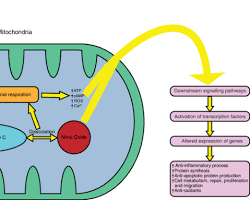
To truly appreciate this interaction, it helps to understand what happens to your cells under stress. When your body is subjected to intense physical exertion, systemic inflammation, psychological burnout, or environmental toxins, your mitochondria produce an excess of free radicals. This internal distress causes a molecule known as nitric oxide (NO) to bind directly to cytochrome c oxidase (CCO)—the critical terminal enzyme in the mitochondrial electron transport chain.
When nitric oxide blocks this enzyme, oxygen cannot bind to it. This effectively creates a molecular traffic jam inside your cellular engines, stalling the synthesis of ATP and shifting the cell into a state of low-energy survival mode.
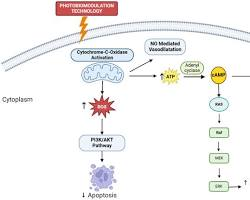
Photobiomodulation acts as a targeted cellular release valve. When red or near-infrared photons hit the stalled cytochrome c oxidase enzymes, they trigger a process called photodissociation. The light energy gently knocks the nitric oxide free, allowing oxygen to rush back into the enzyme and bind cleanly. This immediately restarts the stalled cellular machinery, accelerating the flow of electrons down the inner mitochondrial membrane and causing a rapid increase in ATP synthesis.
By restoring this baseline energy flow, the cell transitions out of its defensive state and gains the vital energy reserves required to handle cellular repair, synthesize structural proteins, and flush out accumulated metabolic waste.
7 Photobiomodulation Protocol Approaches (Evidence-Informed Use Cases)
These are general research-informed usage patterns observed in clinical and experimental studies. They are not medical prescriptions. Using light therapy effectively requires close attention to details like wavelength selection, application timing, distance from the panel, and target surface area.
                                     The 7 Core PBM Protocols
                                                |
       +----------------------------------------+----------------------------------------+
       |                                        |                                        |
       v                                        v                                        v
[ 1. Circadian Sync ]                    [ 2. Biphasic Dosing ]                  [ 3. Post-Workout Repair ]
Morning exposure for wakefulness.        Short, precise sessions to prevent      Targeted near-infrared application
630 - 660 nm wavelengths.                over-saturation of tissue.              on large muscle groups.
       |                                        |                                        |
       +----------------------------------------+----------------------------------------+
       |                                        |                                        |
       v                                        v                                        v
[ 4. Performance Priming ]               [ 5. Skin Dermal Care ]                 [ 6. Deep Connective Tissue ]
Pre-activity exposure to boost           Superficial red light for collagen      Invisible near-infrared wavelengths
muscular ATP and blood flow.             synthesis and inflammation control.     penetrating deep joints.
                                                |
                                                v
                                     [ 7. Lifestyle Ritual ]
                                     Low-stress consistency to drive
                                     long-term biological adaptation.
1. Morning Light Exposure (Circadian Support Context)
Many PBM users apply red or near-infrared light in the morning to align with natural circadian rhythms. This practice closely mimics the dense concentration of non-visible infrared and red light spectrums found during a natural, early-morning sunrise.
Your eyes and skin contain specialized light-sensitive receptors that feed directly into the master clock in your brain. Delivering clear red and near-infrared light to your body first thing in the morning signals your brain to safely suppress melatonin production, synchronize your natural daytime cortisol pulse, and kickstart cellular energy production across your entire system.
Target Wavelengths: 630 nm to 660 nm (Visible Red Light Spectrum)
The Workflow: Stand or sit 12 to 18 inches away from a high-power PBM panel for 10 to 15 minutes within the first hour of waking up. Allow the light to wash over your eyes (closed or using safety goggles) and your exposed chest or torso.
📌 Example: In cities like London or Toronto, where sunlight exposure is limited during winter months, individuals often use light-based devices in the morning to support consistent wake cycles.
By installing a consistent morning light ritual, users can offset the grogginess and seasonal blues that stem from spending the dark winter months indoors under sterile, unnatural office lighting.
2. Low-Intensity Short Duration Exposure
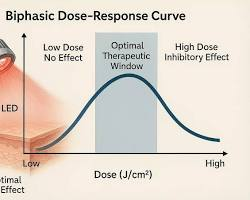
Short sessions (commonly studied in research models) are often used to avoid overstimulation. PBM research indicates a biphasic dose response, meaning both underexposure and overexposure may reduce effectiveness. This delicate balance means that while a small dose of light triggers a highly beneficial cellular healing cascade, an excessive dose can cause a complete reversal of those benefits.
Target Wavelengths: Blended 660 nm and 850 nm spectrums
The Workflow: Limit your direct exposure to 5 to 10 minutes per specific skin area. Keep your device at a moderate distance to maintain a balanced level of energy delivery, avoiding the temptation to sit directly against a high-power panel for prolonged periods.
When you over-dose your tissue with light, you generate a massive wave of intracellular reactive oxygen species (ROS) that overpowers your cells’ natural defense networks. This triggers an inhibitory phase that stalls cellular recovery, which completely undoes the positive mitochondrial effects you are looking for.
3. Localized Muscle Recovery Application
Athletes in the US and UK often use PBM devices on targeted muscle groups after training. High-intensity physical exertion causes significant muscular damage, local inflammation, and an accumulation of cellular waste products like lactic acid. Applying near-infrared light directly to tired muscles after exercise increases blood flow, speeds up the clearance of metabolic waste, and promotes faster cellular repair.
Target Wavelengths: 810 nm to 850 nm (Deep-Penetrating Near-Infrared Spectrum)
The Workflow: Within 2 hours following the end of your training session, position your light device close to the skin surface (roughly 2 to 6 inches away) directly over the primary muscles worked. Treat each specific muscle group for 10 to 12 minutes.
📌 Example: A runner in New York may apply red light to quadriceps after long-distance training sessions to support recovery routines alongside stretching and nutrition.
This localized approach helps minimize the severity of Delayed Onset Muscle Soreness (DOMS), allowing athletes to return to their high-level training schedules much quicker without risking chronic overtraining.
4. Pre-Activity Exposure (Performance Context)
Some studies explore PBM before physical activity to support cellular energy availability. While post-workout light focuses entirely on repairing tissue, pre-activity light is designed to proactively load your cells with energy. By flooding your working muscles with photons before you lift, sprint, or cycle, you pre-charge your mitochondrial ATP reserves and expand local blood vessels.
Target Wavelengths: 660 nm paired with 810 nm or 830 nm
The Workflow: Administer a concentrated, high-powered dose of light directly to your primary muscle groups 5 to 30 minutes before your workout. Spend a fast, intense 3 to 5 minutes per target zone with the device positioned close to your skin.
Clinical research shows that pre-conditioning muscles with light therapy delays the onset of muscular fatigue, increases the total repetitions an athlete can complete before reaching failure, and significantly lowers post-workout markers of systemic muscle damage like creatine kinase.
5. Skin-Level Photobiomodulation
Lower wavelength red light (around 630–660 nm) is widely studied in dermatological applications. Visible red light wavelengths have a shallower penetration profile, meaning they are completely absorbed within the upper layers of the skin. This makes them ideal for targeting dermal fibroblasts—the specific cells responsible for building collagen, elastin, and supporting skin repair.
Target Wavelengths: 630 nm to 660 nm (Pure Red Light)
The Workflow: Ensure your skin is completely clean and free of heavy cosmetics or sunscreens. Position your LED panel or light mask 4 to 6 inches away from your face or targeted skin zone for 10 minutes, 3 to 4 times a week.
📌 Example: Clinics in Singapore and Seoul commonly use LED-based PBM devices in skin wellness treatments.
This targeted surface application helps calm local skin inflammation, reduces redness, accelerates the healing of blemishes, and naturally boosts systemic collagen synthesis to support long-term skin health.
6. Near-Infrared Deep Tissue Application
Near-infrared wavelengths (810–850 nm) are used in research settings for deeper tissue penetration. Unlike visible red light, near-infrared light is completely invisible to the human eye and travels deep into the body. These deep wavelengths easily pass through skin, subcutaneous fat layers, and bodily fluids to reach dense connective tissues, deep muscle structures, and bone.
The Workflow: Place your PBM panel close to the skin or gently resting against the targeted area over large joint complexes, deep muscle bodies, or along the spine. Deliver a steady session for 12 to 15 minutes per zone.
📚 Reference: Review the optical physics showing how invisible near-infrared spectra bypass outer skin barriers via PubMed 30647935.
This deep-tissue approach is highly valued in clinical settings for its ability to target joint spaces, calm chronic inflammation in dense ligaments, and support standard physical therapy routines for long-standing joint discomfort.
Instead of focusing on intensity alone, many modern wellness practitioners emphasize consistency over sporadic use. Your mitochondria adapt to light through a process called genetic transcription. A single massive dose of light therapy once every few weeks will not create lasting improvements; your cells require regular, predictable signals to fundamentally upgrade their energy production systems.
Target Wavelengths: Blended Red and Near-Infrared Spectrums
The Workflow: Build a low-stress schedule, applying light for 10 minutes per session, 4 to 5 days a week. Treat this time as a foundational part of your routine, pairing it with other relaxing habits.
📌 Example: Users in Canada often integrate PBM sessions into evening recovery routines similar to meditation or stretching.
By turning your light therapy into a regular wellness habit, you prompt your cells to create more mitochondria over time (a process known as mitochondrial biogenesis), which steadily improves your everyday physical and mental resilience.
Photobiomodulation and Mitochondria
Research suggests that red and near-infrared light may influence mitochondrial function by interacting with components of the electron transport chain. This has led to scientific interest in its role in:
Cellular energy metabolism
Oxidative stress modulation
Tissue repair processes
When your mitochondria are working optimally, your entire body functions better. However, when your cells are overwhelmed by modern stressors—like chronic sleep loss, processed diets, or constant digital overload—they enter a state of metabolic slowdown.
+---------------------------------------------------------------------------------------------------+
|                                 The Mitochondrial Support Matrix                                  |
+---------------------------------------------------------------------------------------------------+
|  System Level       |  Mitochondrial Impact of Light Wavelengths                                  |
+---------------------+-----------------------------------------------------------------------------+
|  ATP Energy Output  |  Clears nitric oxide blocks to keep the electron transport chain moving.    |
|  Oxidative Health   |  Triggers a brief ROS pulse that strengthens natural antioxidant defenses.  |
|  Inflammation Care  |  Supports the transition of tissues from a stressed state to a repair state. |
|  Microcirculation   |  Promotes local nitric oxide release to widen blood vessels and buy oxygen.  |
+---------------------------------------------------------------------------------------------------+
By improving the efficiency of the cytochrome c oxidase enzyme, light therapy fundamentally alters how your cells communicate. It helps turn down the production of systemic inflammatory markers while turning up cellular growth factors. This creates a highly supportive environment where tissue repair, cellular maintenance, and systemic recovery can happen naturally and efficiently.
📚 Reference: Learn how chronic light exposure alters cell homeostasis and tissue recovery mechanisms long-term over atNCBI PMC6728553.
Internal Biohelixa Learning Links
To expand your knowledge of cellular optimization and performance protocols, explore our dedicated bio-hacking resources:
It is primarily studied for its potential role in supporting cellular energy processes, regulating localized inflammation, and assisting with tissue and muscle recovery routines.
2. Is red light therapy scientifically proven?
Research is actively ongoing, but thousands of peer-reviewed laboratory and clinical studies show that specific wavelengths of light reliably interact with mitochondrial enzymes and influence cellular signaling pathways.
3. How often should PBM be used?
Most research emphasizes consistency and appropriate dosing rather than high intensity or frequent exposure. Using a device 4 to 5 times per week for 10 to 15 minutes per session is a standard approach for general wellness.
4. Does PBM directly increase energy levels?
It helps support and optimize your cells’ natural energy production processes, but individual experiences will vary depending on your baseline health, lifestyle habits, and how consistently you use the technology.
5. Can PBM replace medical treatment?
No. It should be considered a supportive wellness approach to help optimize cellular function, not a replacement for professional healthcare guidance or medical treatments.
6. Can I get the same results from everyday household LED bulbs?
No, household LED bulbs lack the precise spectral narrowness and the power output (irradiance) required to pass through the skin barrier. While they look similar to the eye, they cannot deliver enough energy density to reach your mitochondria.
7. Should I wear eye protection during my red light therapy sessions?
Yes, you should always wear appropriate eye protection, particularly when your protocol involves high-powered panels or near-infrared wavelengths. Because near-infrared light is invisible, your eyes cannot trigger a natural blink reflex to protect themselves from intense exposure.
Disclaimer
This article is for educational and informational purposes only. It is not intended as medical advice, diagnosis, or treatment. Photobiomodulation should not replace professional healthcare guidance. Always consult a qualified healthcare provider before using any wellness or light-based device.
Final Thoughts
Photobiomodulation is an evolving area of research with growing interest in cellular energy and recovery science. While early studies suggest potential biological effects, it is best understood as a supportive wellness tool rather than a standalone intervention.
To get the most out of your health technology, it is essential to remember that light therapy works best when paired with healthy everyday habits. No matter how advanced your red light panel is, it cannot override the impacts of poor sleep, chronic dehydration, or high daily stress. By combining consistent light protocols with smart lifestyle fundamentals, you can help your cells perform at their absolute best over the long term.
Content on BioHelixa is created by Puma U, a certified Lab Technician (DMLT) with over 10 years of experience in public health and laboratory science, including clinical exposure within India's National Rural Health Mission (NRHM). His background in laboratory diagnostics and metabolic science provides practical insight into how cellular biology, hormones, and bio-tracking influence human performance.
📋 Editorial Review
Select health-related content on BioHelixa may be reviewed by Dr. Prashant G (MBBS), a practicing medical doctor, to support general accuracy and improve content quality. This review is intended for educational quality assurance only and does not represent formal medical certification or individualized medical advice.
⚠️ Disclaimer: This content is for educational and informational purposes only and is not intended as a substitute for professional medical advice, diagnosis, or treatment.